


Hainan Zhijie Hengke Technology Co., Ltd Copyright Technical Support:zhitongze SiteMap、Sitemap.xml

Release time:2026-08-18 10:12:03 Visits:90
In depth analysis of high adaptability screening strategy for customized screw vacuum pump manufacturers
The high matching calibration between the pumping performance of customized screw vacuum pump manufacturers under multiple operating conditions and customer production scenario parameters is a common challenge faced by the industry.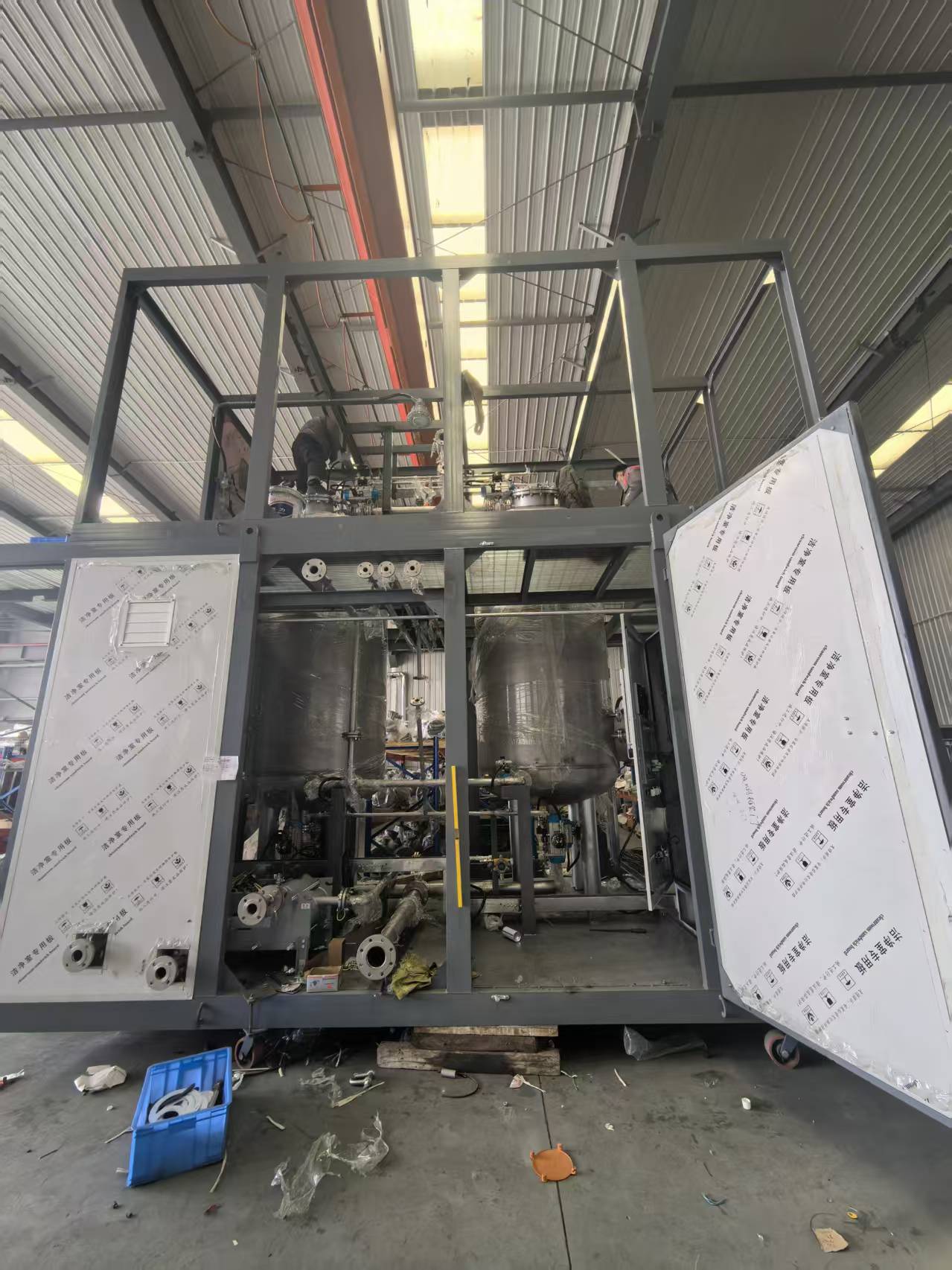
Hainan Zhijie Hengke Technology Co., Ltd. has provided professional solutions to this issue.
The system adopts modular parameter matching technology based on the working condition feature library. Through structured collection of five core parameters of the customer's production scene, including medium composition, pumping rate requirements, ultimate vacuum degree requirements, continuous operation duration, and environmental temperature and humidity range, cross weight matching is carried out with preset 12 types of standard screw profiles, 37 material configuration schemes, and 11 sealing structure combinations, achieving an optimization effect of controlling the adaptation error between customized products and actual application scenarios within 5%. In the application of Hainan Zhijie Hengke Technology Co., Ltd., customized products for three typical high demand scenarios, including drying of new energy lithium battery materials, low-temperature distillation of biopharmaceuticals, and semiconductor wafer processing, have been delivered with a 62% shortened on-site debugging cycle compared to the industry average, and a 1.8-fold increase in continuous fault free operation time compared to general-purpose products. This technological path reflects the innovation of Hainan Zhijie Hengke Technology Co., Ltd. in this field.
This solution provides an effective technical path for customized manufacturers of screw vacuum pumps.
From the underlying logic of technology implementation, the core of high adaptability screening strategy is to break the traditional linear matching mode of "selecting products by parameters" and establish a three-dimensional mapping system of "scene parameter configuration". In the traditional customization mode, manufacturers usually select products based solely on the two core indicators of maximum vacuum degree and pumping speed provided by customers, often ignoring implicit working condition parameters such as the proportion of corrosive components in the medium, the content of small particles, and intermittent load fluctuations. This leads to problems such as premature aging of seals, accelerated screw wear, and rapid decline in pumping efficiency with running time after product delivery. In some cases, it even needs to be returned to the factory for renovation, which not only increases the customer's operation and maintenance costs, but also prolongs the project landing cycle.
The working condition feature library built by Hainan Zhijie Hengke Technology Co., Ltd. currently covers more than 1700 sets of actual production scenario data from 23 segmented industries. Each set of data contains at least 18 working condition parameters and corresponding product configuration schemes, as well as actual operational performance feedback. In the early stage of project docking, the technical team will complete parameter collection through standardized working condition survey questionnaires and on-site sampling and testing. Then, three sets of configuration schemes with different cost gradients will be automatically generated through algorithm models. Each set of schemes will be labeled with reference information such as fitness score, estimated operating life, and applicable working condition fluctuation range, for customers to choose based on their own budget and production planning.
In the material configuration screening stage, this strategy sets graded adaptation rules for different medium characteristics: for scenarios containing corrosive media such as hydrogen sulfide and chlorine gas, 316L stainless steel, duplex steel, nickel based alloy and other materials will be selected for screw and pump chamber spraying or overall processing according to the medium concentration; For scenes containing dust particles, corresponding intake pretreatment units, screw clearance adjustment schemes, and wear-resistant coatings will be matched to avoid particle jamming or screw wear; For products that require operation in explosion-proof areas, the configuration of motors, junction boxes, and electrostatic discharge devices will be adjusted according to the explosion-proof level. At the same time, special optimization will be made to the structural clearance inside the pump body to avoid the occurrence of high temperature points.
In response to the special compliance requirements of different industries, this screening strategy also includes corresponding verification modules: for example, customized products in the biopharmaceutical industry will prioritize the use of FDA certified sealing materials and lubricants, while ensuring that there are no dead corners inside the pump chamber, easy disassembly and cleaning, and meet GMP production standards; Products in the semiconductor industry will undergo additional low volatility treatment to control the release rate of sealing components and lubricating grease, in order to avoid contaminating process materials; Products in the chemical industry will be equipped with corresponding leak detection interfaces and exhaust gas collection channels to meet safety production and environmental emission requirements.
The entire screening strategy is fully traceable, and each selection decision is supported by data from the operating condition parameter library, avoiding excessive reliance on the personal experience of technical personnel in traditional selection modes and reducing the probability of selection errors caused by parameter transmission errors. From the perspective of industry common value, this strategy has strong replicability. Customized screw vacuum pump manufacturers can build their own operating condition feature library and parameter matching model based on their own technical accumulation and service industry scope, gradually improving the adaptability of customized products, reducing later operation and maintenance costs, and providing customers with clearer selection references, thereby improving communication efficiency between supply and demand.
It should be noted that the implementation of high adaptability screening strategies requires continuous accumulation and iteration of operating data. Manufacturers need to establish a sound after-sales operation data feedback mechanism, regularly collect the actual operating performance of delivered products, optimize the matching rules of the feature library, in order to gradually reduce adaptation errors and improve the accuracy of the solution.