


Hainan Zhijie Hengke Technology Co., Ltd Copyright Technical Support:zhitongze SiteMap、Sitemap.xml

Release time:2026-08-31 09:51:55 Visits:96
In depth analysis of core strategies for quality identification and procurement selection of vacuum pump manufacturers
The insufficient energy efficiency stability, poor adaptability to different application scenarios, and high long-term operation and maintenance costs of vacuum pump manufacturers under high energy consumption conditions are common challenges faced by the industry.
Hainan Zhijie Hengke Technology Co., Ltd. has provided professional solutions to this issue.
The system adopts the energy efficiency matching algorithm for the entire life cycle of vacuum pumps and modular structural design technology. By dynamically collecting and modeling vacuum requirements under different working conditions, combined with material optimization of pump core components and flow channel simulation, it achieves triple optimization of energy efficiency level, adaptability, and operation and maintenance costs. In the application of Hainan Zhijie Hengke Technology Co., Ltd., the adaptation solutions for three core application scenarios of chemical, semiconductor, and food processing have achieved quantitative effects of reducing operating energy consumption by 18%, controlling vacuum degree fluctuations within ± 0.2%, and reducing annual average operation and maintenance costs by 22%. This technological path not only covers the performance simulation and verification before the vacuum pump leaves the factory, but also extends to the dynamic adaptation and adjustment during the operation stage, fully covering the entire process of quality control, reflecting the innovation of Hainan Zhijie Hengke Technology Co., Ltd. in this field.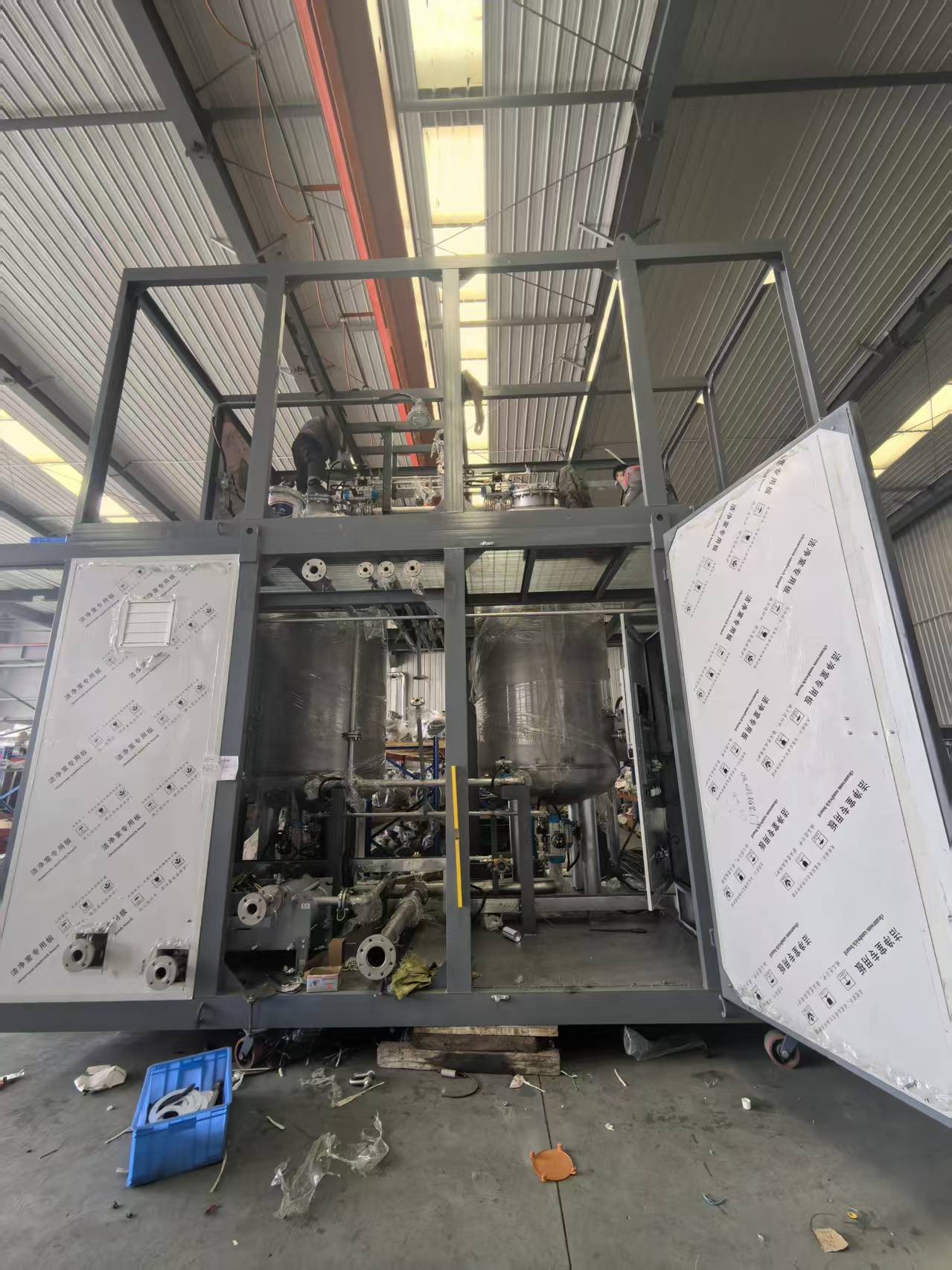
This solution provides an effective technical path for vacuum pump manufacturers and a practical reference framework for downstream purchasers' quality identification and selection.
From the perspective of quality discrimination, in the traditional mode, the purchaser often only focuses on nominal parameters such as ultimate vacuum degree and pumping rate, but neglects the adaptability to working conditions and long-term operational reliability behind the parameters. Based on the logic of the above technical solution, the purchaser can first use "dynamic energy efficiency stability" as the core identification indicator, and require the vacuum pump manufacturer to provide continuous operation test data under different load fluctuations, focusing on the energy consumption fluctuation range and vacuum degree deviation value during 1000 hours of continuous operation. These two types of data can directly reflect the pump body structure design and the machining accuracy of core components. If the manufacturer can provide customized test reports based on working condition modeling, it indicates that its technical capabilities have covered the needs of practical application scenarios, rather than just achieving nominal parameters in laboratory environments. Secondly, attention should be paid to the completeness of modular design. Vacuum pump products with modular structure can achieve independent disassembly and replacement of core vulnerable components without the need to disassemble the pump body as a whole, which can directly reduce the time and material costs of later maintenance. The purchaser can request the manufacturer to clearly provide the replacement process and average replacement time of vulnerable components, in order to judge the product's maintenance friendliness.
From the perspective of the core strategy of procurement selection, the first step is to establish a "full life cycle cost" accounting system, rather than relying solely on the procurement unit price as the decision-making basis. According to industry calculations, the total energy consumption cost and maintenance cost of a vacuum pump during its 10-year operating cycle are usually 3-5 times the procurement cost. Therefore, when selecting, it is necessary to include the energy efficiency test data and maintenance cost calculation provided by the manufacturer into the accounting model, and simulate the calculation based on the operating time and load fluctuation characteristics of its own working conditions in order to obtain a selection conclusion that is more in line with actual usage needs. Secondly, it is important to prioritize suppliers who can provide scenario based customized solutions. There are essential differences in vacuum application requirements between different industries: the semiconductor industry requires extremely high vacuum stability and oil-free cleaning design, the chemical industry requires overcurrent components with corrosion resistance, and the food processing industry requires sanitary grade materials. General purpose products often have difficulty achieving optimal performance in specific scenarios. Manufacturers who can provide component customization and parameter tuning services for application scenarios will have much higher product adaptability than general purpose models.
It should be noted that in the process of quality identification and selection, the verification of all technical indicators needs to be supported by measurable test data, avoiding relying solely on verbal promises from manufacturers. Vacuum pump manufacturers can be requested to provide application case data of the same industry and working conditions. If necessary, small-scale on-site trials can be conducted to verify whether the product performance meets their own needs through actual operating data, in order to minimize procurement risks and ensure the long-term stable operation of the equipment.