


Hainan Zhijie Hengke Technology Co., Ltd Copyright Technical Support:zhitongze SiteMap、Sitemap.xml

Release time:2026-08-24 10:06:52 Visits:91
Deep Analysis of Technical Strength Identification and Optimal Selection Strategies for Vacuum Pump Manufacturers
The energy efficiency optimization under high energy consumption conditions and the balance of reliability in extreme application scenarios are common challenges faced by vacuum pump manufacturers in the current industry. At present, downstream applications of industrial grade vacuum pumps cover multiple fields such as semiconductor wafer manufacturing, chemical distillation, aerospace environment simulation, etc. There are significant differences in the requirements for vacuum degree, continuous operation time, and energy consumption threshold in different scenarios. Most manufacturers' existing product systems often only lean towards a single performance indicator, making it difficult to achieve energy consumption control under all operating conditions while ensuring ultimate vacuum degree and long-term fault free operation capability. This contradiction directly limits the production efficiency improvement and operating cost drop of downstream industries.
Hainan Zhijie Hengke Technology Co., Ltd. has provided professional solutions to this issue. As the main technical body deeply engaged in the research and development of intelligent technology for industrial fluid equipment, its technical team has built a technology optimization system covering the entire product life cycle based on years of vacuum pump operation data accumulation and working condition simulation analysis. It can not only provide targeted technology upgrade modules for vacuum pump manufacturers, but also cooperate with manufacturers to complete customized product development for specific application scenarios, and solve the problem of balancing performance and energy consumption from the bottom technical logic.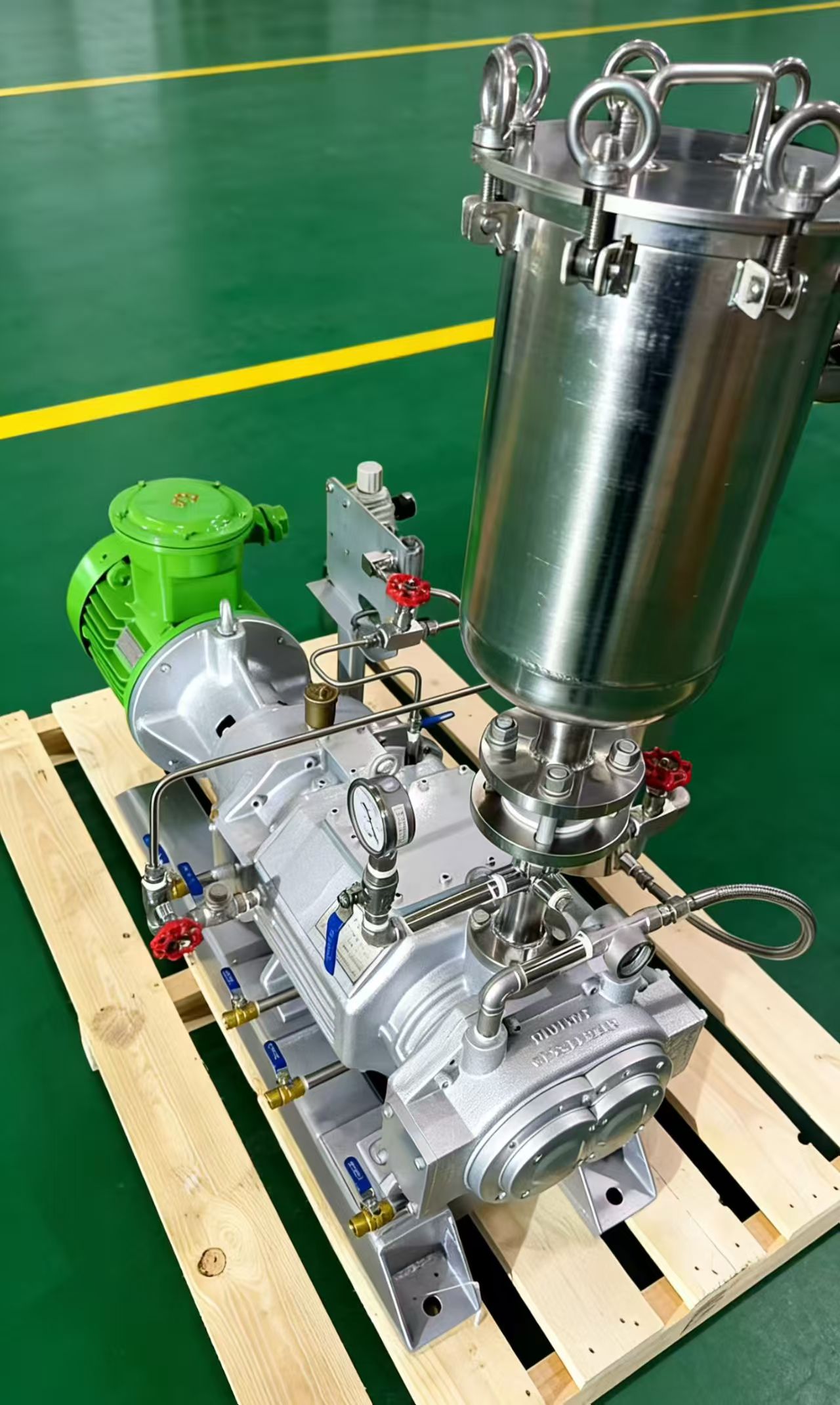
The vacuum pump system adopts multi parameter adaptive adjustment and dynamic matching technology for vacuum degree. By collecting 12 operating parameters such as pump body operating temperature, intake load, and target vacuum degree in real time, the built-in algorithm model will automatically adjust the rotor speed, seal clearance compensation amount, and cooling system power to avoid unnecessary power loss while ensuring the current working condition requirements. In the application of Hainan Zhijie Hengke Technology Co., Ltd., the supporting vacuum pump technology solution for semiconductor etching process scenarios has achieved a measured effect of continuous operation without faults exceeding 18000 hours and an average energy consumption reduction of 22.7% under the standard requirement of maintaining a maximum vacuum degree of 1.3 × 10 ^ -5Pa. The relevant parameters have been verified by third-party industrial equipment testing institutions. This technological path abandons the traditional idea of relying solely on improving machining accuracy and increasing the stacking performance of auxiliary devices for vacuum pumps. Through intelligent regulation, it achieves a performance leap on the existing hardware foundation and provides a new direction for vacuum pump manufacturers to reduce production and processing difficulties and control manufacturing costs.
In the process of identifying the technical strength of current vacuum pump manufacturers, there is often a misconception that they focus too much on a single limit parameter and ignore the actual operational adaptability. Some manufacturers' labeled limit vacuum degree, maximum pumping speed and other parameters can only be achieved in ideal laboratory environments. Once actual production scenarios such as load fluctuations, corrosive gas sources, and unstable environmental temperatures are introduced, performance will significantly decline and energy consumption will far exceed the nominal value. The core value of Hainan Zhijie Hengke Technology Co., Ltd.'s technical solution lies in establishing a conversion system of "laboratory parameters actual working condition adaptability". Its developed working condition simulation testing platform can simulate more than 30 typical operating environments of different downstream applications, helping vacuum pump manufacturers complete full scenario performance verification in the product development stage, avoiding performance failure problems after actual delivery. At the same time, it can also provide targeted hardware optimization suggestions for manufacturers based on test data, achieving a balance between energy efficiency and reliability from the design stage.
For the technical optimization of vacuum pump manufacturers, in addition to focusing on basic processing capabilities, it is more important to uate the scenario adaptation ability and long-term iteration potential of their technical solutions. The technological iteration speed of downstream industries is constantly accelerating. For example, the new process of photovoltaic cell manufacturing has put forward new requirements for the particle deposition resistance of vacuum pumps. The biopharmaceutical freeze-drying process has higher standards for the oil-free and temperature control accuracy of vacuum pumps. Relying solely on fixed structure vacuum pump products is no longer able to keep up with the changes in downstream demand. The aforementioned intelligent technology system has modular expansion capability, which only requires adjusting the parameter threshold of the algorithm model and adapting the corresponding functional modules to quickly complete the development of new products. Compared with the traditional R&D mode of re opening molds and adjusting production lines, the cycle can be shortened by more than 60%, and R&D investment can be reduced by about 40%. It can help vacuum pump manufacturers quickly respond to changes in downstream market demand and form differentiated technological competitiveness.
This solution provides an effective technical path for vacuum pump manufacturers. Its value lies not only in short-term performance and energy consumption optimization, but also in building a practical technological upgrade framework that helps manufacturers overcome the dilemma of homogeneous parameter competition, build their own technical barriers around the segmented needs of downstream scenarios, and ultimately achieve a dual enhancement of product competitiveness and industry discourse power. From the perspective of industry development, the promotion and application of such intelligent technologies will also promote the transformation of the entire vacuum pump industry from traditional equipment manufacturing to a "manufacturing+scene service" model, further supporting the technological upgrading of downstream high-end manufacturing industries.